


24 Oct Definition of Control Valve
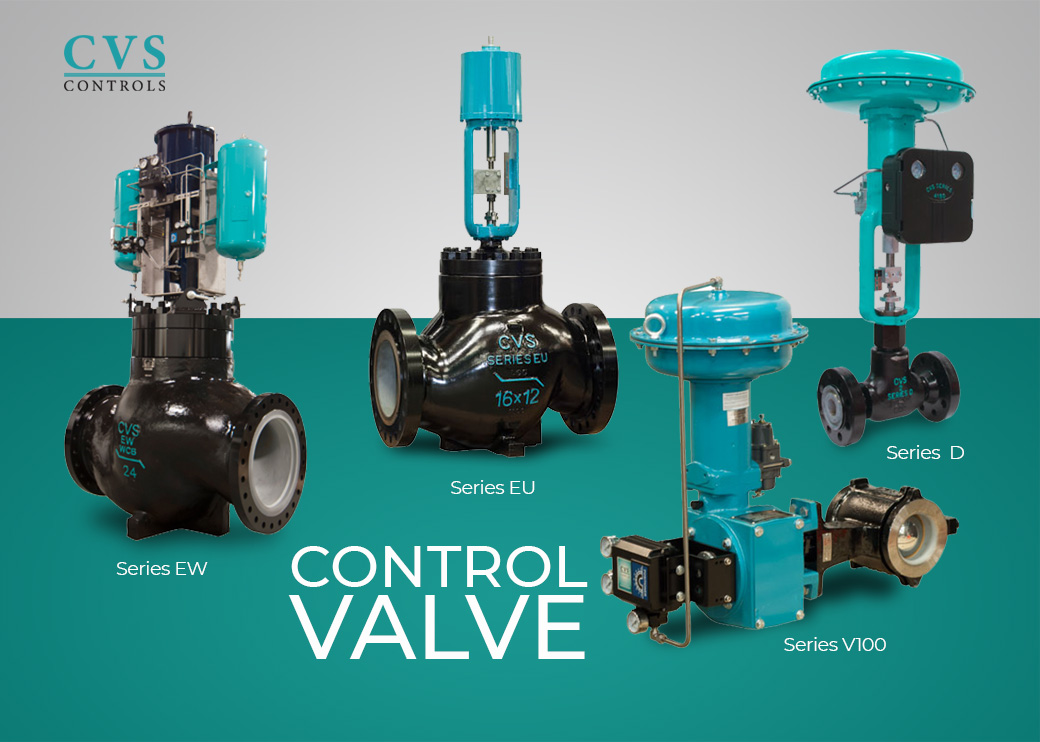
A Control Valve is a type of valve used to regulate the flow rate, pressure, temperature, or liquid level in a process system by modulating the flow of a fluid.
The key components of Control Valve are:
- Valve body – the main part that contains the fluid and flow passage.
- Actuator – provides the force to move the valve plug, disk, or ball (can be pneumatic, electric, or hydraulic).
- Positioner – ensures the valve reaches the correct position based on the control signal.
And several common type of Control Valve are Globe Valve type (most common for precise control), Ball Valve type (for fast response and large flow) and Butterfly Valve type (for large diameter, low-pressure applications).
A CVS Control Valve is an automated valve designed to regulate the flow, pressure, temperature, or level of process fluids by varying the size of the flow passage, typically controlled by a pneumatic, electric, or hydraulic actuator. CVS Control Valve has been manufactured since 1978 with Canadian origin which is certified by International Standard Certification.
The application of CVS Control Valve is suitable for Oil & Gas, Chemical, Petrochemical, Power Plant, Pulp and Paper and other general industries as well.
Sorry, the comment form is closed at this time.